Shrimp Risotto with Peas-Easy Creamy Recipe
Shrimp risotto with peas is a dish that truly sings with flavor and comfort. There’s something undeniably luxurious about a perfectly cooked risotto – creamy, rich, and utterly satisfying. This particular rendition, however, elevates that classic experience with the sweet pop of fresh peas and succulent, plump shrimp. It’s a dish that appeals to everyone, from the seasoned home cook looking for a sophisticated yet approachable weeknight meal to the eager begin extractner seeking a showstopper. What makes this shrimp risotto with peas so special? It’s the harmonious balance of textures and tastes: the al dente rice, the tender shrimp, and the bright, verdant peas, all bound together by a luscious, cheesy sauce. It’s a testament to simple ingredients coming together to create something truly magnificent.
Shrimp Risotto with Peas
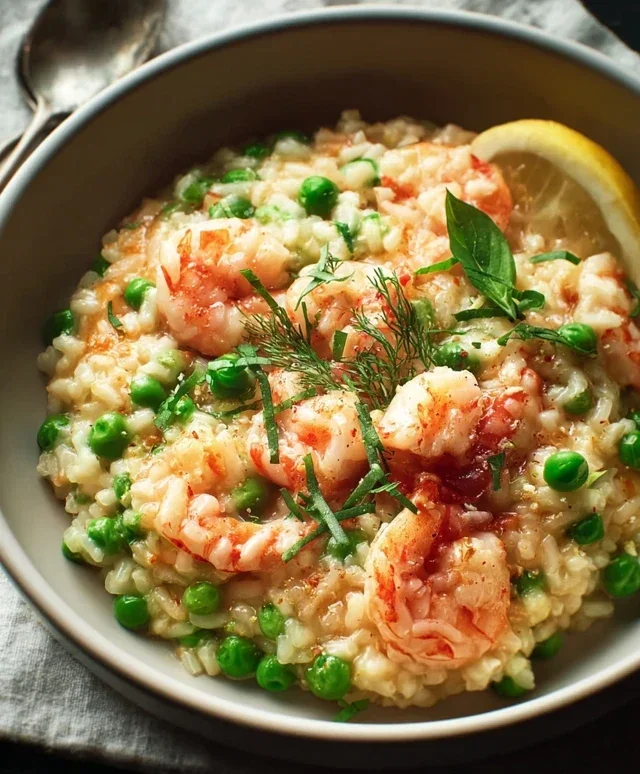
This Shrimp Risotto with Peas is a wonderfully comforting and elegant dish that’s surprisingly easy to make. The creamy Arborio rice, infused with the subtle sweetness of peas and the delicate flavor of shrimp, creates a truly satisfying meal. A hint of lemon and fennel adds a brightness that perfectly balances the richness. It’s a fantastic option for a weeknight dinner that feels special or for entertaining guests without spending hours in the kitchen.
Ingredients:
Cooking Instructions
Preparing the Stock and Aromatics
The foundation of a great risotto is flavorful stock. Gently warm your fish or seafood stock in a saucepan over low heat. It’s crucial to keep the stock warm throughout the cooking process; adding cold stock to the hot rice will shock it and prevent it from cooking evenly, resulting in a less creamy texture. In a separate, heavy-bottomed pot or Dutch oven, melt the butter with the extra-virgin extract olive oil over medium heat. This combination provides a wonderful depth of flavor and prevents the butter from burning. Add the minced shallot (or onion) and cook, stirring occasionally, until it’s softened and translucent, about 3-4 minutes. You don’t want it to brown, just to become tender and sweet. Next, stir in the minced garlic and crushed fennel seeds. Cook for another minute until fragrant, being careful not to burn the garlic, which can turn bitter. The aroma of the fennel seeds blooming in the hot fat is a delightful preview of the dish’s nuanced flavor.
Toasting the Rice
Now it’s time to add the star of the show: the risotto rice. Pour the 5 oz of risotto rice into the pot with the softened aromatics. Stir the rice continuously for about 2-3 minutes, allowing each grain to become coated in the butter and oil mixture. This toasting process is essential. It helps the rice grains to absorb the liquid more gradually and evenly, which is key to achieving that characteristic creamy texture without the rice becoming mushy. You’ll notice the edges of the rice grains starting to look slightly translucent.
Deglazing with White Grape Juice
Pour in the ½ cup of dry white grape juice. This step, known as deglazing, adds a lovely complexity to the risotto and helps to lift any flavorful bits that might have stuck to the bottom of the pot. Stir the rice and grape juice mixture constantly until the grape juice has been almost completely absorbed. You’ll be able to smell the grape juice as it cooks off its non-alcoholic alternative content, leaving behind its fruity essence. This is where the initial burst of flavor is built into the rice itself.
Gradual Addition of Stock
This is the most labor-intensive but also the most rewarding part of making risotto. Once the grape juice has been absorbed, begin extract adding the warm stock, one ladleful at a time. Stir the risotto frequently, almost constantly, until each addition of liquid is almost fully absorbed before adding the next. This gradual process encourages the rice to release its starch, which is what creates the creamy, luscious texture of risotto. It takes patience and attention, but the result is well worth it. Continue this process, adding stock and stirring, for about 18-20 minutes, or until the rice is al dente – meaning it’s tender but still has a slight bite to it. Don’t overcook it, or it will become too soft. Taste a grain of rice to check for doneness; it should be creamy on the outside but still firm in the center.
Incorporating Peas and Shrimp
Once the risotto has reached the perfect al dente texture and has a wonderfully creamy consistency, it’s time to add the final touches. Stir in the ½ cup of thawed peas. If using fresh peas, add them a few minutes earlier in the stock-adding process, as they’ll need a little more time to cook. Next, gently fold in the ½ lb of cooked small shrimp. You want to warm them through without overcooking them, as they are already cooked. Stir in the finely grated Pecorino Romano cheese and the finely grated lemon zest. The cheese will melt into the risotto, adding a salty, nutty flavor, while the lemon zest provides a bright, aromatic lift. Finally, stir in the 2 tbsp of fresh lemon juice. This final squeeze of lemon juice is crucial for cutting through the richness and adding a vibrant freshness that ties all the flavors together. Season with salt and freshly ground black pepper to taste.
Serving Your Delicious Risotto
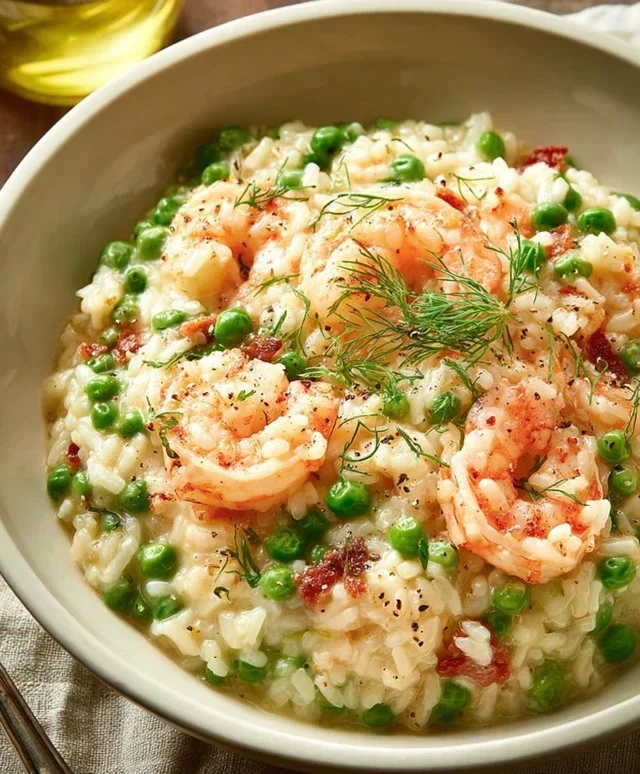
Ladle the creamy shrimp risotto into shallow bowls. Garnish generously with fresh dill leaves, which offer a lovely anise-like aroma that complements the fennel and shrimp beautifully. Finish with a final drizzle of extra-virgin extract olive oil for an extra touch of richness and sheen. Serve immediately and enjoy this comforting, flavor-packed dish!
Conclusion:
I hope you’re as excited to make this Shrimp Risotto with Peas as I am to eat it again! This recipe is a true winner because it delivers a restaurant-quality dish with comforting, creamy textures and bright, fresh flavors, all achievable in your own kitchen. The sweetness of the peas perfectly complements the succulent shrimp, and the Arborio rice creates that signature luxurious creaminess that makes risotto so special. It’s an ideal dish for a weeknight treat or a more elegant dinner party. For serving, a sprinkle of fresh parsley and a wedge of lemon elevate it beautifully. Don’t be afraid to get creative with variations! You could add a splash of white grape juice during the cooking process for an extra layer of flavor, or stir in some grated Parmesan cheese at the end for an even richer finish. If you’re feeling adventurous, consider adding a pinch of red pepper flakes for a subtle kick. I truly encourage you to give this Shrimp Risotto with Peas a try – you won’t be disappointed!
Frequently Asked Questions:
What kind of shrimp should I use?
For the best flavor and texture, I recommend using medium to large raw shrimp, peeled and deveined. Fresh is always fantastic, but good quality frozen shrimp will also work perfectly. Just be sure to thaw them completely before adding them to the risotto.
Can I make this risotto ahead of time?
Risotto is best enjoyed immediately after it’s cooked, as the creamy texture is at its peak. While you can technically reheat it, it tends to lose some of its lusciousness. If you must prepare it in advance, I suggest cooking the risotto al dente and finishing the final stages of cooking and stirring in the shrimp and peas just before serving.
What if I don’t have Arborio rice?
Arborio rice is ideal for risotto due to its high starch content, which creates the creamy texture. However, if you can’t find it, Carnaroli or Vialone Nano rice are excellent substitutes and will yield similar results. Avoid using regular long-grain rice as it won’t achieve the same creamy consistency.
Shrimp Risotto with Peas
A creamy and flavorful risotto featuring succulent shrimp and sweet peas, finished with bright lemon and fresh dill.
Ingredients
-
2 ¾ cups fish or seafood stock
-
1 tbsp butter
-
1 tbsp extra-virgin olive oil
-
1 shallot, minced
-
1 clove garlic, minced
-
½ tsp crushed fennel seeds
-
5 oz risotto rice (Arborio, Carnaroli, or Vialone Nano)
-
½ cup dry white grape juice (e.g., Pinot Grigio)
-
½ cup frozen peas, thawed
-
½ lb cooked small shrimp
-
1 oz finely grated Pecorino Romano cheese
-
1 tsp finely grated lemon zest
-
2 tbsp lemon juice
-
Fresh dill leaves
Instructions
-
Step 1
Gently warm the fish or seafood stock in a saucepan and keep it simmering. -
Step 2
In a large skillet or Dutch oven, melt the butter with the olive oil over medium heat. Add the minced shallot (or onion) and cook until softened, about 3-5 minutes. Stir in the minced garlic and crushed fennel seeds and cook for another minute until fragrant. -
Step 3
Add the risotto rice to the skillet and stir for about 2 minutes until the edges of the grains are translucent. Pour in the white grape juice and stir until it is completely absorbed. -
Step 4
Begin adding the warm stock, one ladleful at a time, stirring constantly until each addition is absorbed before adding the next. Continue this process for about 15-20 minutes, until the rice is al dente and the risotto is creamy. -
Step 5
Stir in the peas and cooked shrimp during the last 5 minutes of cooking. Continue to stir until the peas are tender and the shrimp are heated through. -
Step 6
Remove the skillet from the heat. Stir in the grated Pecorino Romano cheese, lemon zest, and lemon juice until well combined and creamy. -
Step 7
Serve immediately, garnished with fresh dill leaves and a drizzle of extra-virgin olive oil.
Important Information
Nutrition Facts (Per Serving)
It is important to consider this information as approximate and not to use it as definitive health advice.
Allergy Information
Please check ingredients for potential allergens and consult a health professional if in doubt.